


Short answer: Instrument care uses a few product types: pre-cleaning foams or sprays to keep soil moist, enzymatic or alkaline detergents for cleaning, neutralisers to remove residues, water-soluble lubricants for joints and special cleaners for stains. Use products made for medical instruments, at the correct dose.
Main product types
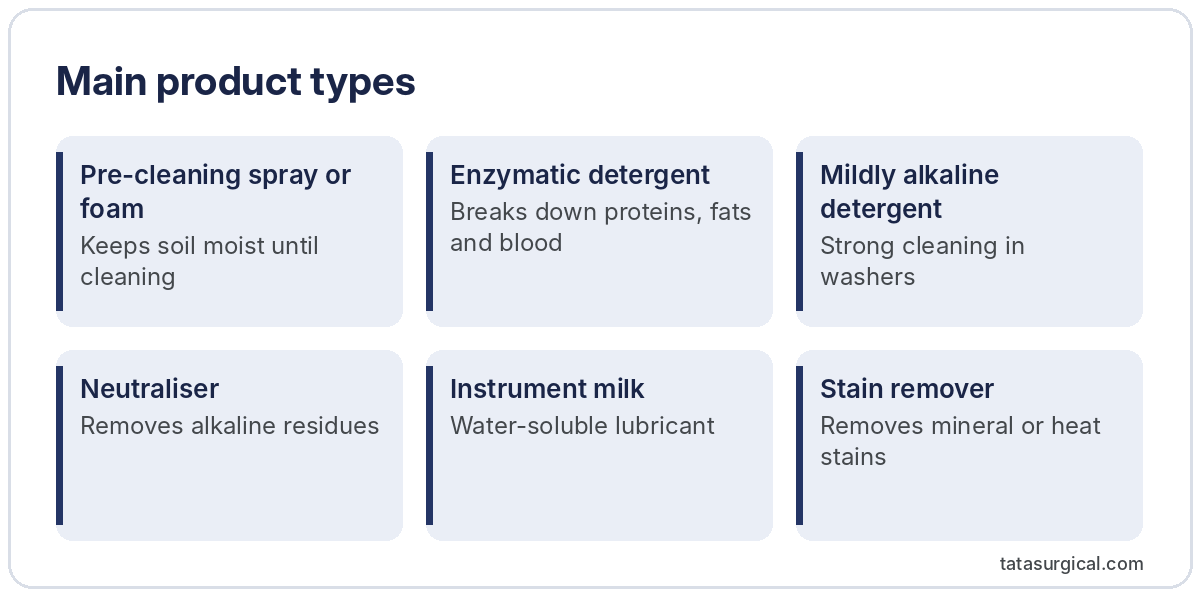
- Pre-cleaning spray or foam: Keeps soil moist until cleaning
- Enzymatic detergent: Breaks down proteins, fats and blood
- Mildly alkaline detergent: Strong cleaning in washers
- Neutraliser: Removes alkaline residues
- Instrument milk: Water-soluble lubricant
- Stain remover: Removes mineral or heat stains
Using products correctly
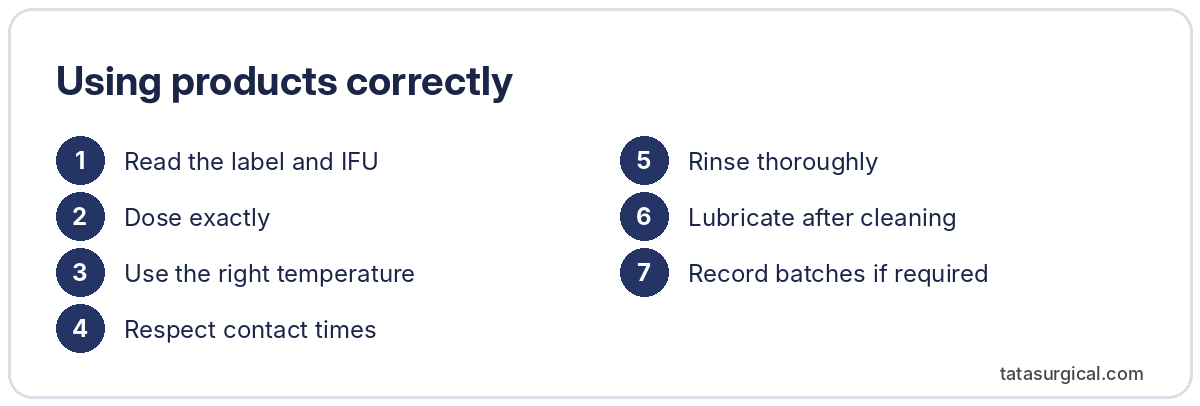
- Read the label and IFU
- Dose exactly
- Use the right temperature
- Respect contact times
- Rinse thoroughly
- Lubricate after cleaning
- Record batches if required
Products to avoid on instruments
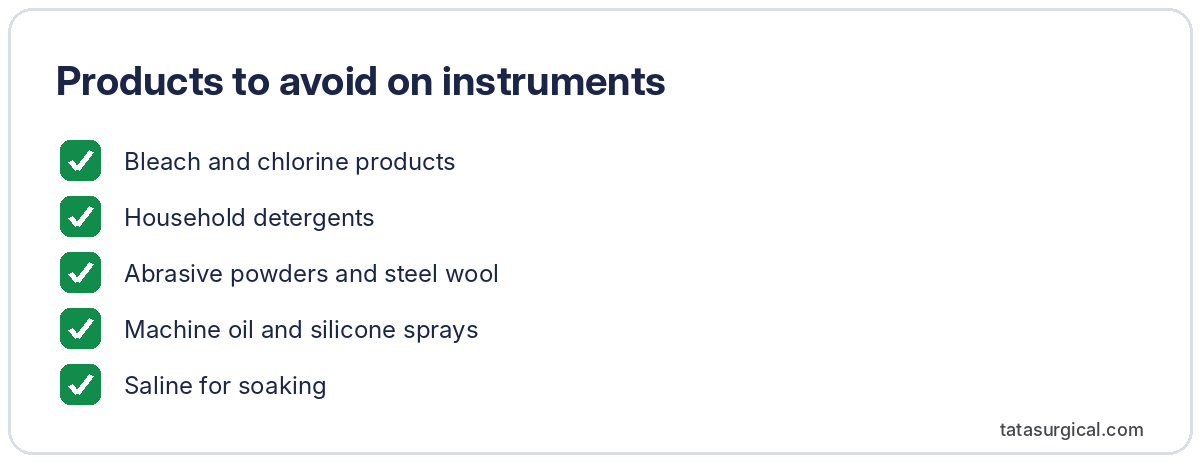
- Bleach and chlorine products
- Household detergents
- Abrasive powders and steel wool
- Machine oil and silicone sprays
- Saline for soaking
In detail: matching products to your process
Manual cleaning, ultrasonic cleaning and washer-disinfectors each need suitable detergents. Some detergents foam, which is fine for manual cleaning but bad for machines. Ask your supplier for products compatible with your equipment and instruments.
Worked example
A clinic using dish soap for manual cleaning sees stiff joints and stains. Switching to an enzymatic instrument detergent and instrument milk solves both.
Proof box
Proof: Reprocessing guidelines and instrument makers’ IFUs specify compatible detergent types; many instrument care brochures warn against chlorine and saline.
Frequently asked questions
Is enzymatic better than alkaline? Both have roles; enzymatic is gentle, alkaline is stronger in washers.
Do I need a neutraliser? Often after alkaline washes; follow the process design.
Can lubricant stay on during sterilisation? Water-soluble lubricants are designed to.
How do I remove white spots? Use an approved acidic cleaner as directed.
Glossary
- Enzymatic: contains enzymes that break down soil.
- Neutraliser: product that removes alkaline residue.
- Contact time: time a product must work.
Key takeaways
- Use medical instrument products
- Dose and rinse correctly
- Avoid chlorine and abrasives
Standards and sources
- AKI: instrument care brochures
- Related: instrument milk (see What is instrument milk, and do I need it?), cleaning guide (see The complete guide to cleaning and sterilising surgical instruments)
Instruments from Tata Surgical
Looking for instruments like these?
Browse our catalogue or send us your drawing. We reply with prices, lead time and shipping terms.