



Short answer: Poor water causes stains, deposits, corrosion and weak cleaning. Hard water leaves mineral spots; chlorides cause pitting; silicates leave rainbow stains. Use suitable water for washing, demineralised or reverse-osmosis water for final rinses and good-quality feed water for steam.
Water problems and effects
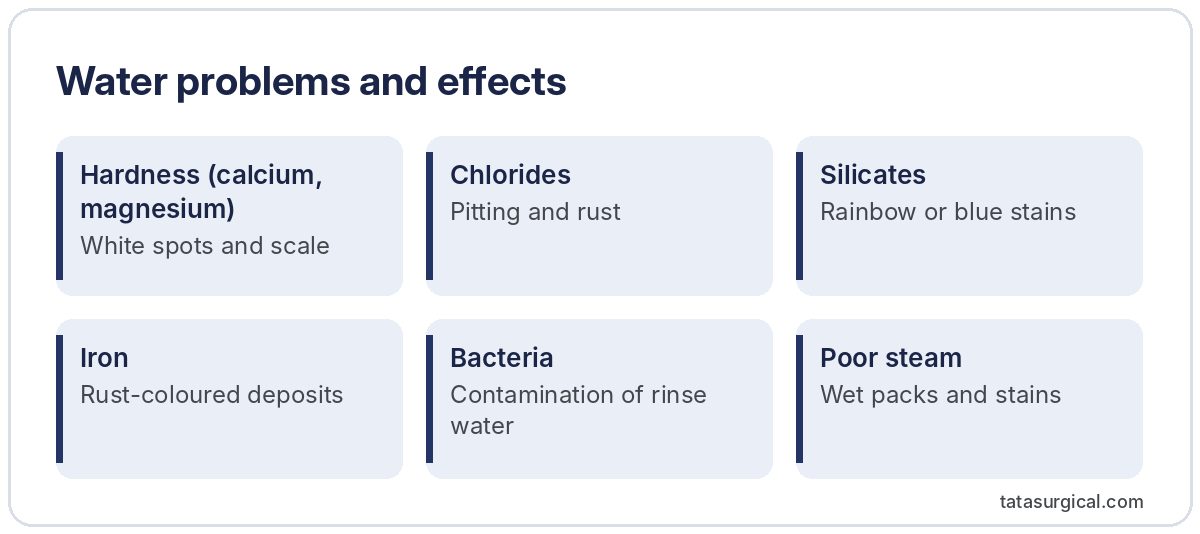
- Hardness (calcium, magnesium): White spots and scale
- Chlorides: Pitting and rust
- Silicates: Rainbow or blue stains
- Iron: Rust-coloured deposits
- Bacteria: Contamination of rinse water
- Poor steam: Wet packs and stains
Improving water quality
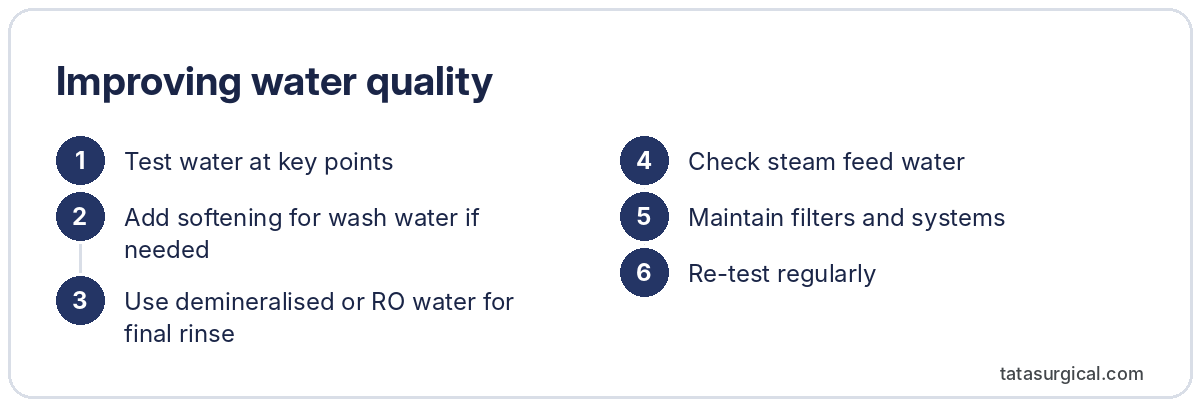
- Test water at key points
- Add softening for wash water if needed
- Use demineralised or RO water for final rinse
- Check steam feed water
- Maintain filters and systems
- Re-test regularly
Signs of water problems
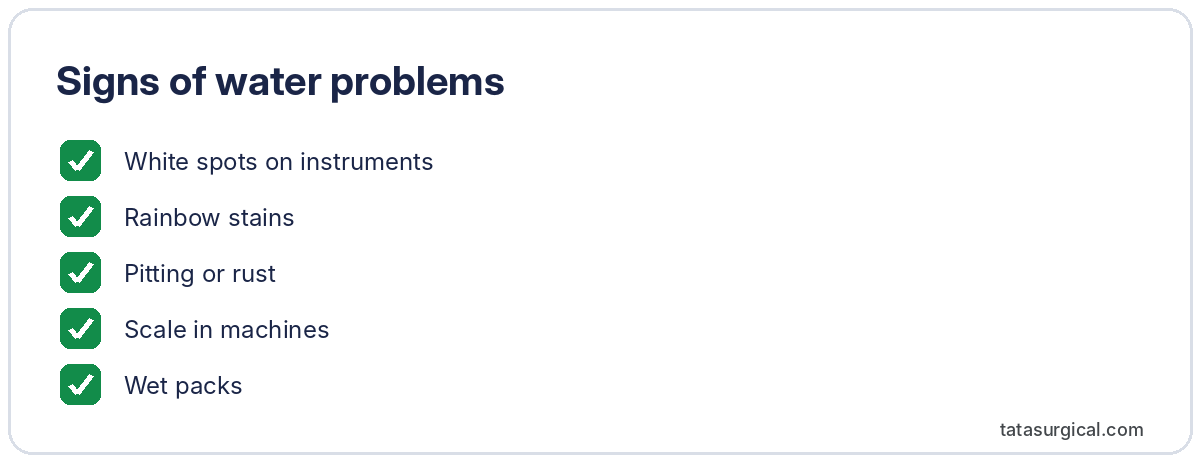
- White spots on instruments
- Rainbow stains
- Pitting or rust
- Scale in machines
- Wet packs
In detail: steam quality
Steam can carry contaminants from feed water. Poor steam can stain instruments and cause wet packs. Large departments monitor steam quality as part of steriliser maintenance.
Worked example
A hospital with rainbow stains finds high silicate levels in its rinse water. Switching the final rinse to RO water stops the stains.
Proof box
Proof: Instrument care guidance (for example from AKI) links many stains and corrosion problems directly to water quality and recommends demineralised water for final rinsing.
Frequently asked questions
Is tap water okay for rinsing? It may cause spots; demineralised water is better for final rinses.
What is RO water? Water purified by reverse osmosis.
Do benchtop autoclaves need special water? Many require distilled or demineralised water.
Can stains be removed? Some can with special cleaners; pitting cannot.
Glossary
- Hardness: mineral content in water.
- Reverse osmosis: purification through a membrane.
- Steam quality: purity and dryness of steam.
Key takeaways
- Test your water
- Use pure water for final rinses
- Maintain systems
Standards and sources
- AKI: Proper maintenance of instruments
- Related: corrosion guide (see Stainless steel and corrosion: why instruments stain and how to prevent it), rust and stains (see Why do surgical instruments rust or stain?)
Ask Tata Surgical
Looking for instruments like these?
Browse our catalogue or send us your drawing. We reply with prices, lead time and shipping terms.