

Short answer: Ambulatory surgery centres (ASCs) perform same-day procedures at high speed. They need lean, standardised sets, procedure kits, enough set copies for rapid turnover, efficient reprocessing and reliable suppliers. Instrument sets were the fastest-growing product sold to US ASCs in 2025.
ASC priorities
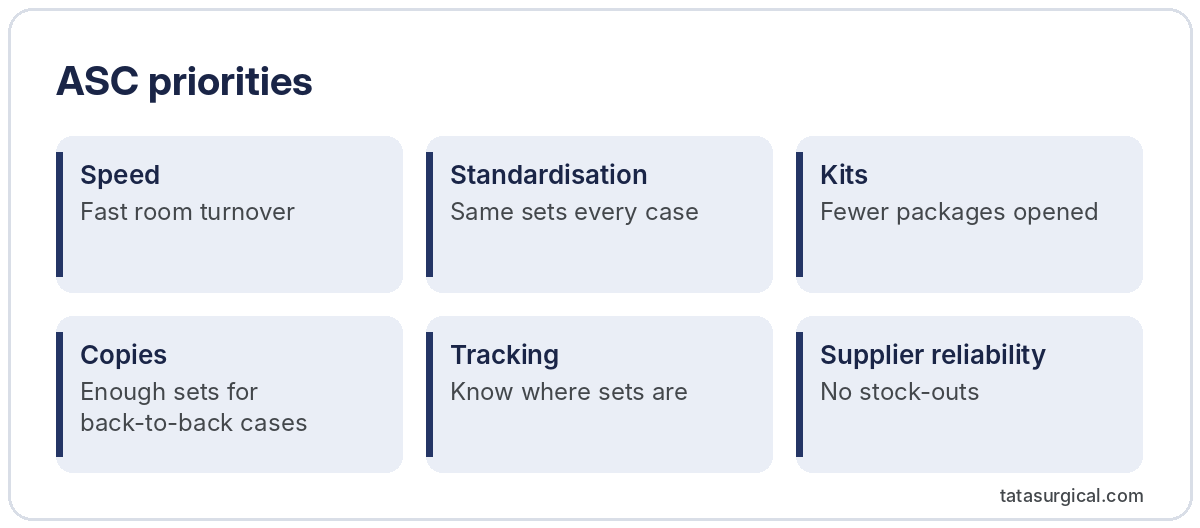
- Speed: Fast room turnover
- Standardisation: Same sets every case
- Kits: Fewer packages opened
- Copies: Enough sets for back-to-back cases
- Tracking: Know where sets are
- Supplier reliability: No stock-outs
Planning ASC instruments
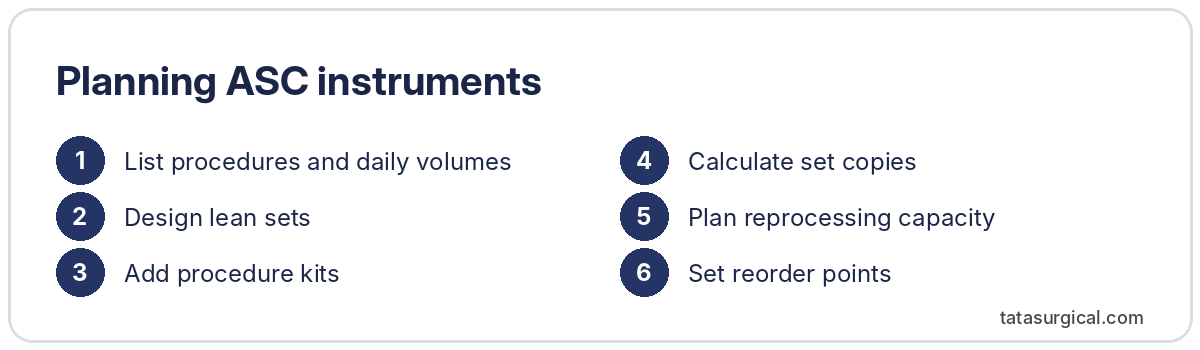
- List procedures and daily volumes
- Design lean sets
- Add procedure kits
- Calculate set copies
- Plan reprocessing capacity
- Set reorder points
ASC readiness
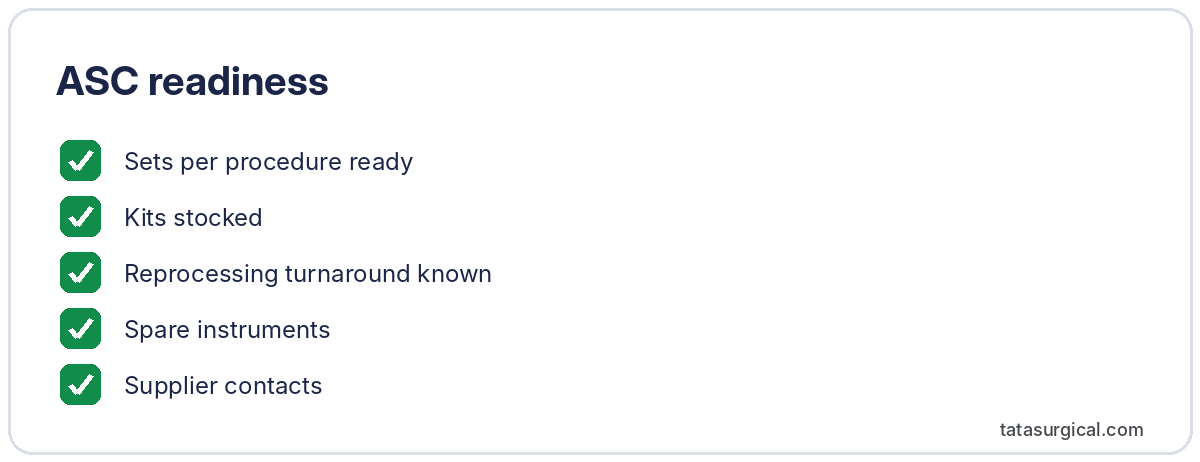
- Sets per procedure ready
- Kits stocked
- Reprocessing turnaround known
- Spare instruments
- Supplier contacts
In detail: ophthalmic and orthopaedic growth
Many cataract, joint and hand procedures have moved to ASCs, driving demand for specialised sets and kits.
Worked example
An ASC doing 20 cataract cases a day keeps enough identical sets to cover cases while others are reprocessed, plus single-use kits for disposables.
Proof box
Proof: HIDA/Clarivate reported instrument sets and systems as the fastest-growing ASC distribution category in 2025 (+9.2%).
Frequently asked questions
Are kits common in ASCs? Yes, very common.
How many set copies? Depends on volume and turnaround.
Do ASCs reprocess on site? Many do; some outsource.
What drives growth? Procedures moving from hospitals.
Glossary
- ASC: ambulatory surgery centre.
- Turnover: time between cases.
- Set copy: duplicate set.
Key takeaways
- Lean sets and kits
- Enough copies
- Reliable supply
Standards and sources
- HIDA: ASC distribution sales
- Related: ASC kits (see Sterile kits for ambulatory surgery centres), kits guide (see Surgical kits and procedure packs: the complete guide)
ASC supply from Tata Surgical
Looking for instruments like these?
Browse our catalogue or send us your drawing. We reply with prices, lead time and shipping terms.