Short answer: Africa relies heavily on imported surgical instruments, with South Africa, Nigeria, Kenya and Egypt among the main demand centres. Public tenders and donor programmes drive much of the demand. Certified, durable instruments at fair prices, supplied through strong local partners, have the best chance.
Where demand comes from
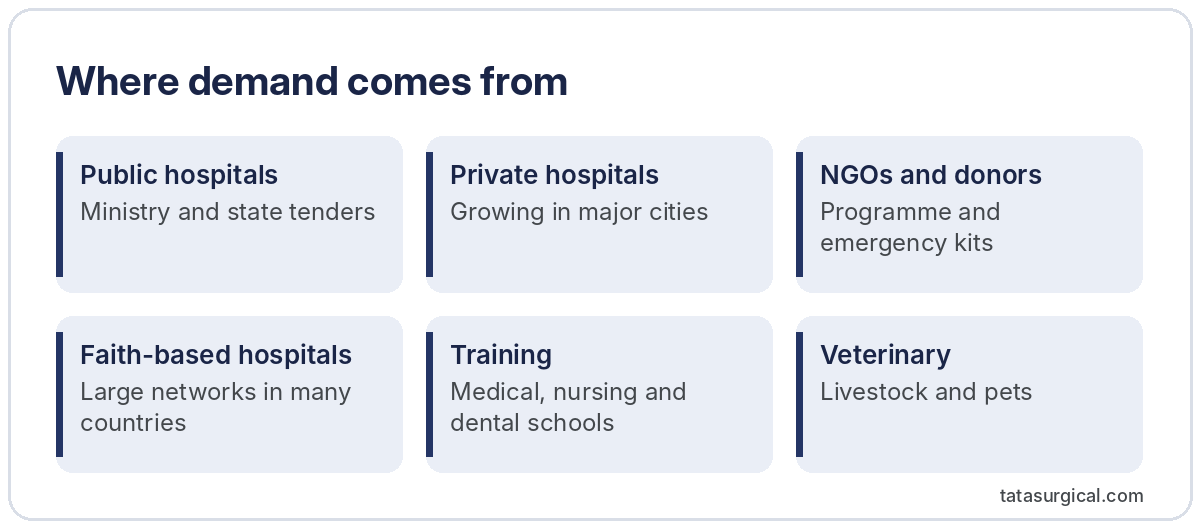
- Public hospitals: Ministry and state tenders
- Private hospitals: Growing in major cities
- NGOs and donors: Programme and emergency kits
- Faith-based hospitals: Large networks in many countries
- Training: Medical, nursing and dental schools
- Veterinary: Livestock and pets
Main markets and regulators
| Country | Regulator |
|---|---|
| South Africa | SAHPRA (licensing of device companies) |
| Nigeria | NAFDAC |
| Kenya | Pharmacy and Poisons Board |
| Egypt | Egyptian Drug Authority |
| Ghana | Food and Drugs Authority |
Winning business in Africa
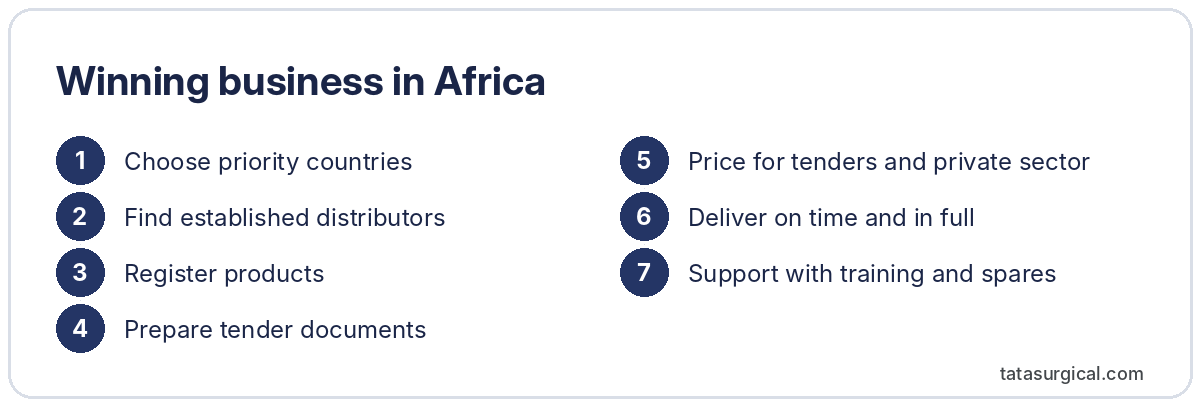
- Choose priority countries
- Find established distributors
- Register products
- Prepare tender documents
- Price for tenders and private sector
- Deliver on time and in full
- Support with training and spares
Why certification pays
Industry reports describe a clear premium for CE-marked or ISO-certified instruments compared with unbranded imports, and tenders often require certificates (see Certified vs unbranded instruments: why certification pays in tenders).
Tender document pack
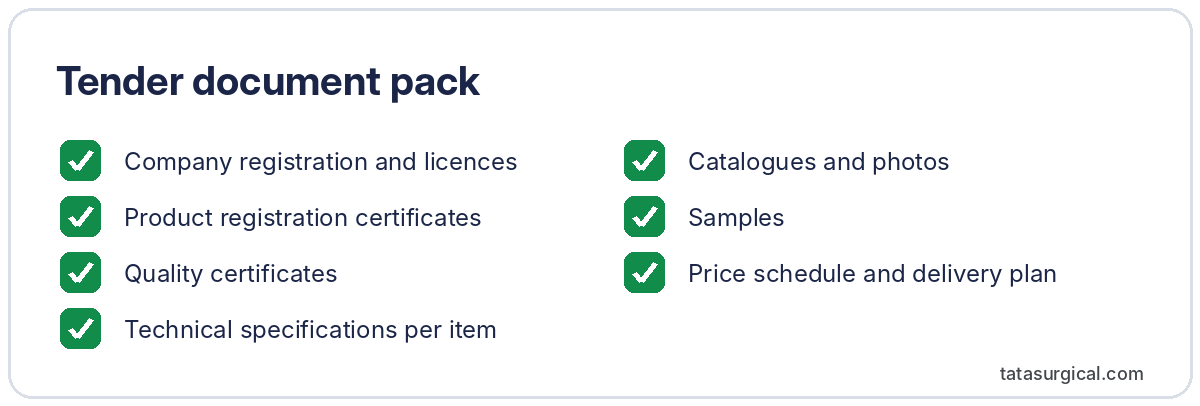
- Company registration and licences
- Product registration certificates
- Quality certificates
- Technical specifications per item
- Catalogues and photos
- Samples
- Price schedule and delivery plan
Worked example
A Nairobi distributor wins a county tender for basic surgical sets by offering certified instruments at a price between European brands and unbranded imports, with delivery in six weeks and a free replacement policy for faulty items.
Proof box
Proof: Market reports on African instrument imports (for example IndexBox category reports) describe high import dependence and a large share of demand from public tenders. National regulators publish their registration rules online.
In detail: logistics and after-sales in Africa
Long lead times, customs delays and high freight costs can make or break a supply contract. Successful suppliers agree realistic delivery dates, ship complete orders, label cartons clearly by consignee and keep spare parts or spare instruments with their distributor. After-sales service, such as replacing faulty items quickly, builds the trust that wins repeat tenders.
Frequently asked questions
Which African countries buy the most instruments? South Africa, Nigeria, Kenya and Egypt are among the main demand centres.
Do NGOs buy directly from manufacturers? Some do, often through approved supplier lists and tenders.
Are prices the only factor? No; certification, delivery reliability and durability also matter.
How do I find a distributor? Trade fairs, embassies’ trade sections, industry associations and referrals.
Glossary
- Tender: formal competitive purchase process.
- Approved supplier list: list of vetted suppliers used by a buyer.
- Consignee: party receiving the goods.
Key takeaways
- Partners and registration first
- Certificates win tenders
- Reliable delivery wins the next tender
Standards and sources
- SAHPRA · NAFDAC · Pharmacy and Poisons Board Kenya
- IndexBox: Africa surgical instrument category reports
- Related: Africa overview (see Selling surgical instruments in Africa: an overview), tenders (see Winning public hospital tenders in Africa), district hospital sets (see Basic surgical sets for district hospitals and health centres)
Africa with Tata Surgical
Talk to us about your country.
Looking for instruments like these?
Browse our catalogue or send us your drawing. We reply with prices, lead time and shipping terms.