


Short answer: Dental cassettes are perforated boxes that hold a complete kit of instruments through use, cleaning, sterilisation and storage. They keep kits complete, protect instruments, reduce handling and sharps injuries, and speed up chairside setup.
Why clinics use cassettes
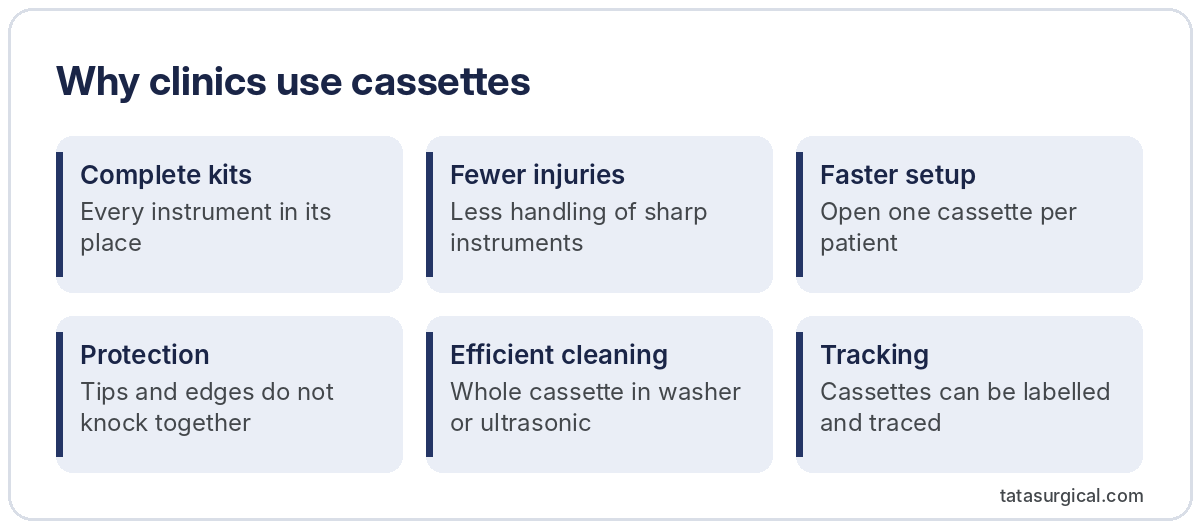
- Complete kits: Every instrument in its place
- Fewer injuries: Less handling of sharp instruments
- Faster setup: Open one cassette per patient
- Protection: Tips and edges do not knock together
- Efficient cleaning: Whole cassette in washer or ultrasonic
- Tracking: Cassettes can be labelled and traced
Cassette types
| Type | Use |
|---|---|
| Examination cassette | Mirror, explorer, probe, pliers |
| Restorative cassette | Excavators, pluggers, carvers, burnishers |
| Hygiene cassette | Scalers, curettes, probe |
| Surgical cassette | Forceps, elevators, surgical items |
| Endodontic cassette | Files, spreaders, pluggers |
Cassette workflow
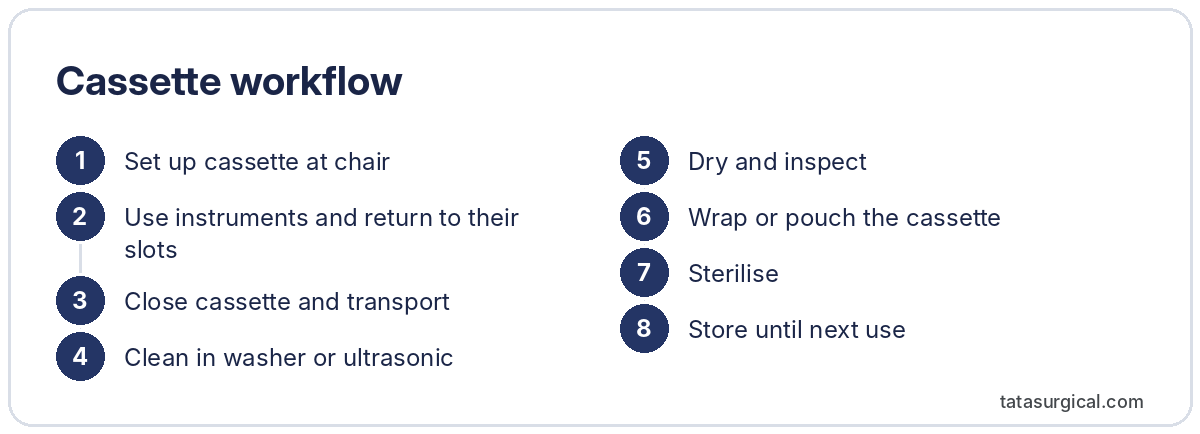
- Set up cassette at chair
- Use instruments and return to their slots
- Close cassette and transport
- Clean in washer or ultrasonic
- Dry and inspect
- Wrap or pouch the cassette
- Sterilise
- Store until next use
Colour coding
Many clinics colour-code cassettes or instrument handles by procedure. Staff can then pick the right kit at a glance and spot missing items quickly.
Setting up a cassette system
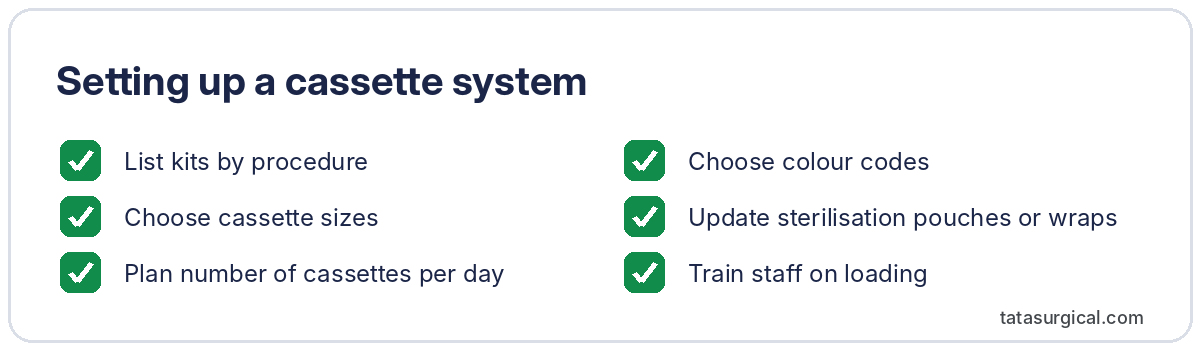
- List kits by procedure
- Choose cassette sizes
- Plan number of cassettes per day
- Choose colour codes
- Update sterilisation pouches or wraps
- Train staff on loading
In detail: how many cassettes do you need?
Count the number of each procedure per day and the time it takes to reprocess a cassette. If a clinic does 20 hygiene appointments a day and reprocessing takes two hours, it may need enough hygiene cassettes to cover several appointments in that window, plus spares. Starting with too few cassettes causes bottlenecks.
Worked example
A three-chair practice moves from loose instruments to cassettes. Chairside setup becomes faster, and sharps injuries during cleaning drop because staff no longer sort loose instruments by hand.
Proof box
Proof: CDC dental infection control guidance recommends methods that reduce handling of contaminated sharp instruments, such as using cassettes.
Frequently asked questions
Can cassettes go in an ultrasonic cleaner? Many can; check the maker’s instructions.
Do cassettes need wrapping? Yes, cassettes are usually wrapped or pouched before sterilisation.
Are plastic or metal cassettes better? Both work; metal is durable, plastic is lighter.
Do cassettes fit every steriliser? Check chamber size before buying.
Glossary
- Cassette: perforated instrument holder.
- Colour coding: using colours to identify kits.
- Wrap: sterilisation material around a cassette.
Key takeaways
- Cassettes keep kits complete and safe
- Plan numbers from daily volume
- Use colour coding for speed
Standards and sources
- CDC: Dental infection prevention and control
- Related: sterilising dental instruments (see How do you sterilise dental instruments?), dental guide (see Dental instruments: the complete guide to names and uses)
Dental kits from Tata Surgical
Ask about kits for your cassettes.
Looking for instruments like these?
Browse our catalogue or send us your drawing. We reply with prices, lead time and shipping terms.