Short answer: Good training covers handling, point-of-use care, cleaning, inspection, lubrication, packing and sterilisation, with hands-on practice and competency checks. Refresh training regularly and track results such as repairs, stains and missing items.
Training topics
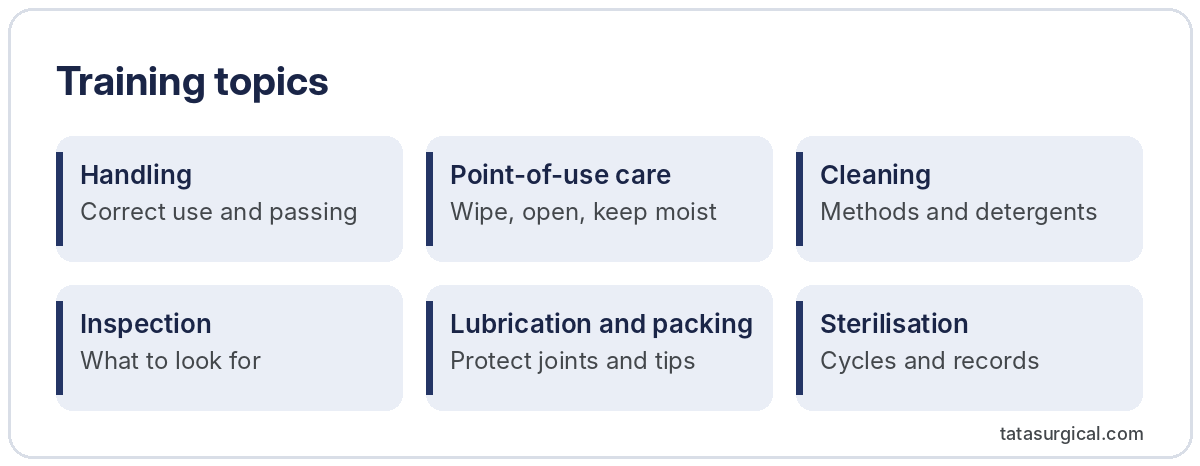
- Handling: Correct use and passing
- Point-of-use care: Wipe, open, keep moist
- Cleaning: Methods and detergents
- Inspection: What to look for
- Lubrication and packing: Protect joints and tips
- Sterilisation: Cycles and records
A simple training programme
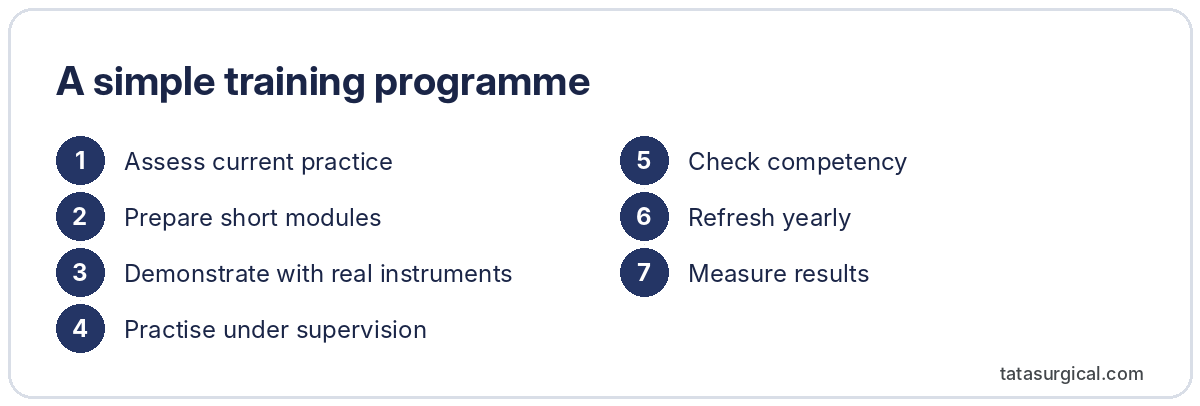
- Assess current practice
- Prepare short modules
- Demonstrate with real instruments
- Practise under supervision
- Check competency
- Refresh yearly
- Measure results
Competency checklist
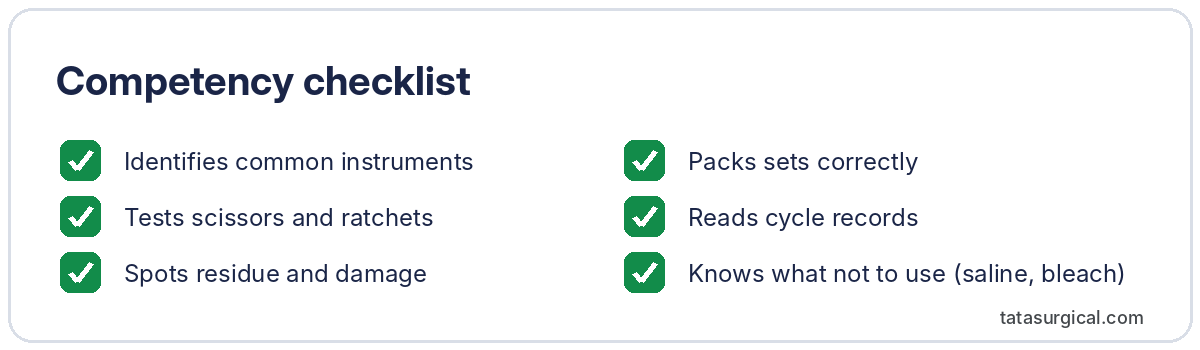
- Identifies common instruments
- Tests scissors and ratchets
- Spots residue and damage
- Packs sets correctly
- Reads cycle records
- Knows what not to use (saline, bleach)
In detail: measuring success
Track repair numbers, stain complaints, missing items and wet packs before and after training. Improvements show the value of training and help secure time for refreshers.
Worked example
After training, a hospital’s instrument repairs fall noticeably over six months, and stain complaints from theatres almost disappear.
Proof box
Proof: Professional sterile services bodies and national guidance recommend documented training and competency assessment for reprocessing staff.
Frequently asked questions
Who needs training? Theatre, clinic and sterile services staff.
How long should training take? Short modules plus practice work best.
Can suppliers help? Many offer care guides and sessions.
How often should we refresh? At least yearly.
Glossary
- Competency: proven ability to do a task correctly.
- Module: short training unit.
- Refresher: repeat training.
Key takeaways
- Train hands-on
- Check competency
- Measure results
Standards and sources
- AKI: instrument care brochures
- Related: cleaning guide (see The complete guide to cleaning and sterilising surgical instruments), safe handling (see Handling instruments safely in the operating theatre)
Care support from Tata Surgical
Looking for instruments like these?
Browse our catalogue or send us your drawing. We reply with prices, lead time and shipping terms.