Short answer: Ultrasonic cleaners use high-frequency sound waves in a liquid to create tiny bubbles that collapse and remove soil from joints, serrations and hard-to-reach areas. They work best on pre-cleaned instruments, opened and fully submerged, in a detergent made for ultrasonic use. Delicate or optical items may not be suitable.
How ultrasonic cleaning works
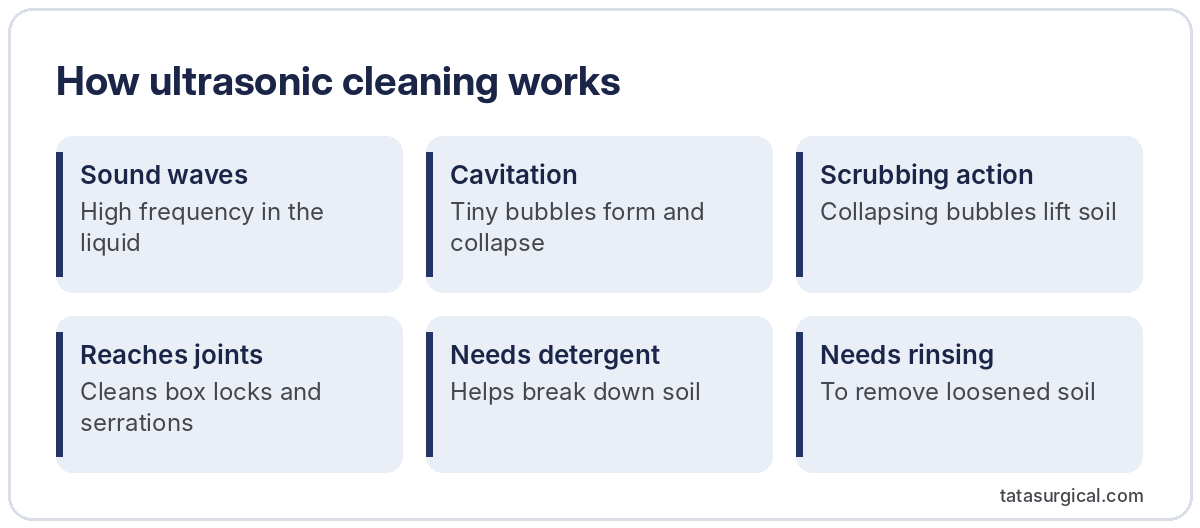
- Sound waves: High frequency in the liquid
- Cavitation: Tiny bubbles form and collapse
- Scrubbing action: Collapsing bubbles lift soil
- Reaches joints: Cleans box locks and serrations
- Needs detergent: Helps break down soil
- Needs rinsing: To remove loosened soil
Using an ultrasonic cleaner
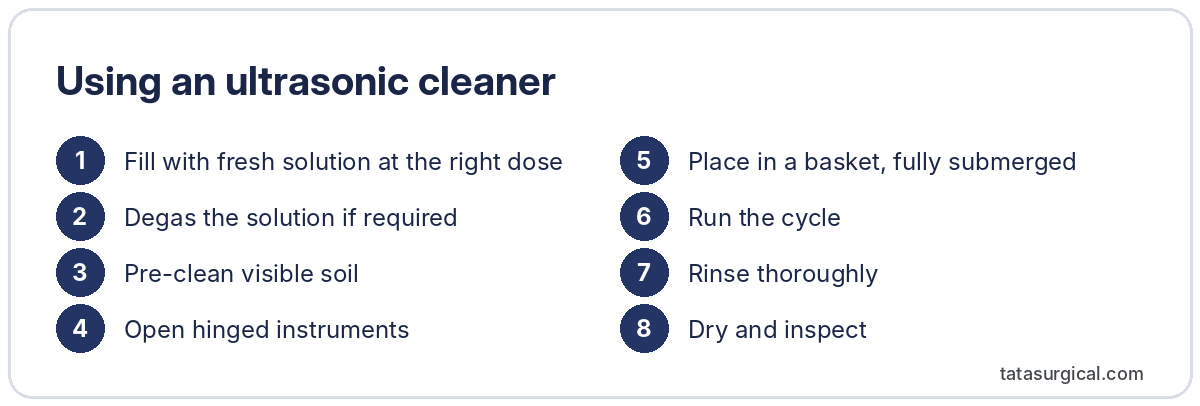
- Fill with fresh solution at the right dose
- Degas the solution if required
- Pre-clean visible soil
- Open hinged instruments
- Place in a basket, fully submerged
- Run the cycle
- Rinse thoroughly
- Dry and inspect
Loading rules
- Do not overload the basket
- Do not stack instruments on top of each other
- Keep instruments in baskets, not on the tank floor
- Separate dissimilar metals if the instructions say so
What not to put in (unless the IFU allows)
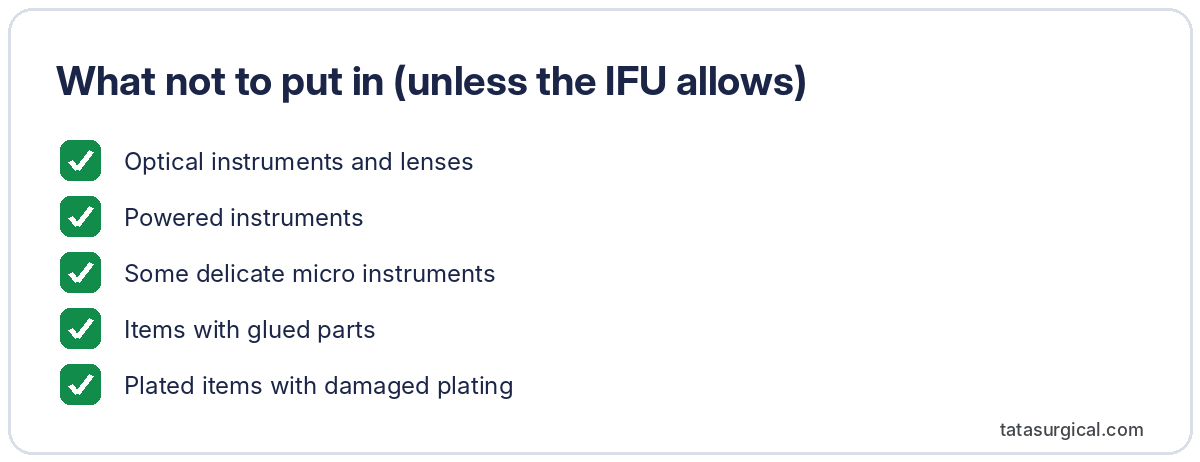
- Optical instruments and lenses
- Powered instruments
- Some delicate micro instruments
- Items with glued parts
- Plated items with damaged plating
Testing
Check performance regularly with test strips or foil tests and record results, as your policy requires.
In detail: why solution changes matter
The solution becomes dirty quickly. Dirty solution redeposits soil and reduces cavitation. Change it at the intervals your policy sets, and whenever it is visibly dirty.
Worked example
A dental clinic finds debris left in hinges. It reduces basket loading, changes the solution more often and adds a test strip check each morning. Cleaning results improve.
Proof box
Proof: ISO 15883 covers washer-disinfectors; ultrasonic cleaners are typically validated and tested according to manufacturer instructions and national guidance, with routine performance tests.
Frequently asked questions
Does ultrasonic cleaning sterilise? No. It cleans; sterilisation follows.
How long is a cycle? Typically several minutes; follow the device instructions.
Can I use dish soap? No. Use detergents designed for ultrasonic instrument cleaning.
Should the lid be closed? Yes, to reduce aerosols.
Glossary
- Cavitation: formation and collapse of bubbles.
- Degassing: removing dissolved air from fresh solution.
- Foil test: test showing cavitation activity.
Key takeaways
- Clean, not sterilise
- Open, submerge, do not overload
- Test and change solution regularly
Standards and sources
- CDC: Disinfection and sterilization guideline
- Related: complete cleaning guide (see The complete guide to cleaning and sterilising surgical instruments)
Instruments from Tata Surgical
Looking for instruments like these?
Browse our catalogue or send us your drawing. We reply with prices, lead time and shipping terms.