

Short answer: Veterinary surgery uses many of the same instruments as human surgery, plus veterinary-specific tools such as spay hooks, emasculators, hoof knives and equine dental floats. Clinics organise instruments into packs for each common procedure and keep spare packs so surgery can continue while others are sterilised.
Core veterinary packs
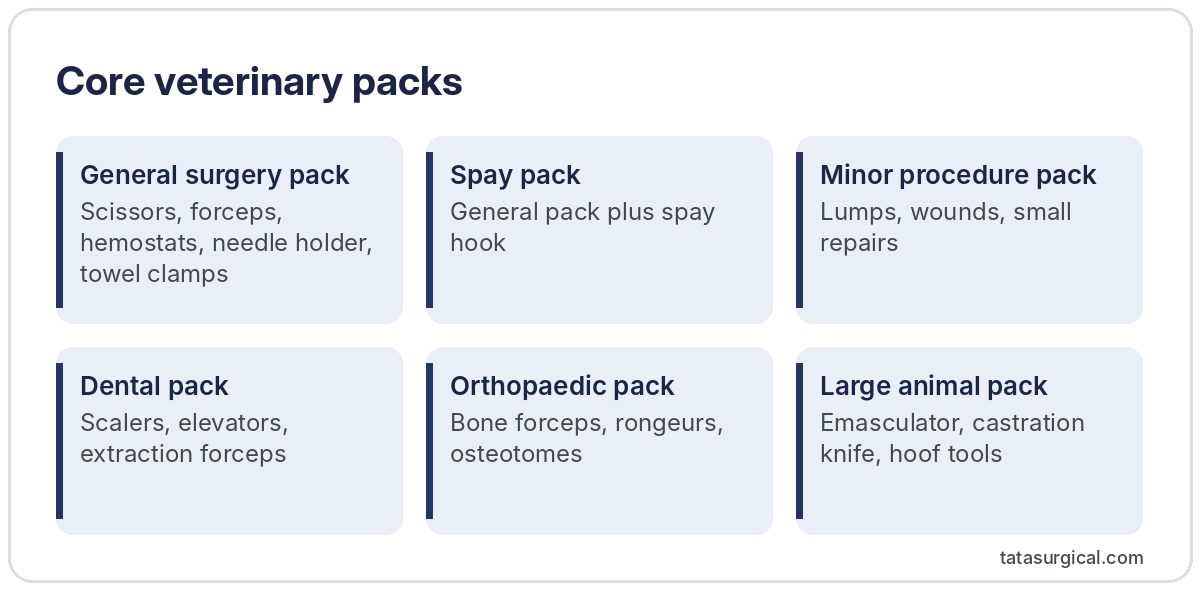
- General surgery pack: Scissors, forceps, hemostats, needle holder, towel clamps
- Spay pack: General pack plus spay hook
- Minor procedure pack: Lumps, wounds, small repairs
- Dental pack: Scalers, elevators, extraction forceps
- Orthopaedic pack: Bone forceps, rongeurs, osteotomes
- Large animal pack: Emasculator, castration knife, hoof tools
Small and large animals
| Small animal | Large animal | |
|---|---|---|
| Main procedures | Spay, neuter, wounds, dental, orthopaedics | Castration, obstetrics, hoof care, wounds |
| Instrument size | Standard and fine | Longer, heavier |
| Setting | Clinic theatre | Clinic and field |
| Sterilisation | Autoclave | Autoclave plus field cleaning |
Setting up packs in a clinic
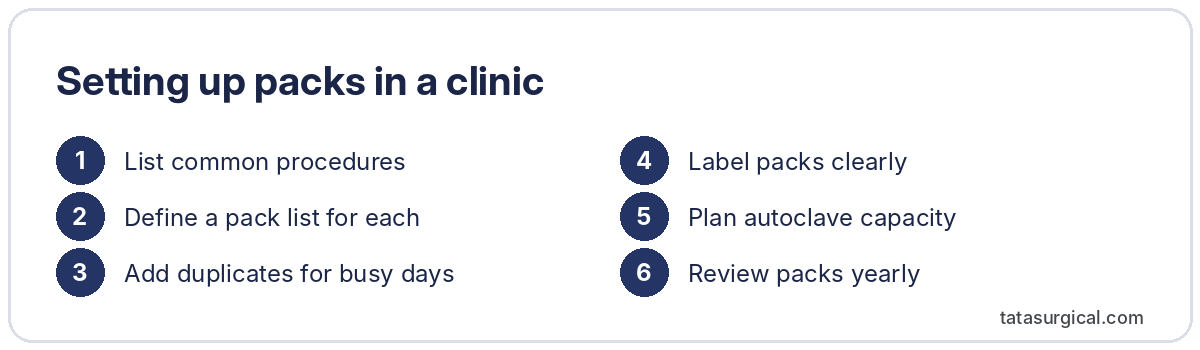
- List common procedures
- Define a pack list for each
- Add duplicates for busy days
- Label packs clearly
- Plan autoclave capacity
- Review packs yearly
Quality checks for vet instruments
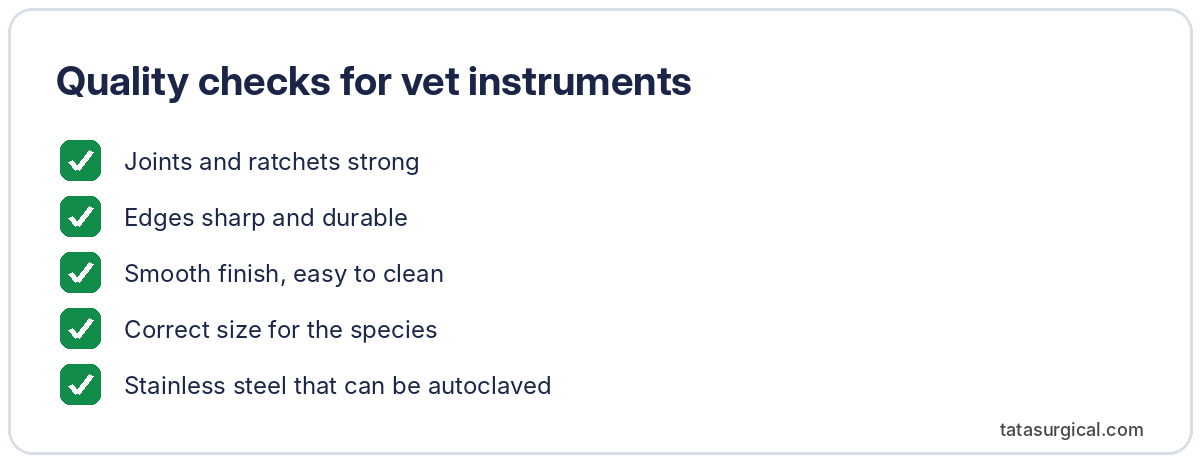
- Joints and ratchets strong
- Edges sharp and durable
- Smooth finish, easy to clean
- Correct size for the species
- Stainless steel that can be autoclaved
In detail: what makes veterinary buying different
Veterinary practices often cover a very wide range of species and procedures with a small team and a limited budget. That makes versatile, durable instruments important. Many clinics choose good-quality reusable instruments for the theatre and simpler or single-use items for field work and outreach programmes such as shelter spay campaigns.
Worked example
A two-vet clinic organises instruments into four general packs, three spay packs, one dental pack and one orthopaedic pack, with a spare needle holder and Metzenbaum scissors in each pack. Surgery days run without waiting for the autoclave.
Proof box
Proof: Industry reports estimate the global veterinary surgical instruments market at roughly US$1.6 to 1.7 billion in 2025, growing about 7% a year, driven by companion animal care.
Frequently asked questions
Can I use human instruments in a vet clinic? Yes, many are the same; instruments should not move between human and animal use.
What is a spay hook? A blunt hook used to find and lift the uterine horn.
How many packs do I need? Enough for your busiest day while others are reprocessed.
Are cheaper grades acceptable? For field or training use they can be; theatre work benefits from surgical grade.
Glossary
- Pack: set of instruments for one procedure.
- Spay: removal of the ovaries and usually the uterus.
- Emasculator: instrument that crushes and cuts the spermatic cord.
Key takeaways
- Organise by procedure
- Keep spares for busy days
- Choose durable instruments for field use
Standards and sources
- Global Market Insights: veterinary surgical instruments
- Related: veterinary buyer’s guide (see Veterinary surgical instruments: a complete buyer’s guide), spay packs (see Spay and neuter kits for veterinary clinics), clinic starter list (see Setting up a veterinary clinic: the starter instrument list)
Veterinary range from Tata Surgical
Request our veterinary catalogue.
Looking for instruments like these?
Browse our catalogue or send us your drawing. We reply with prices, lead time and shipping terms.