

Short answer: Horse care uses specialised instruments for dentistry (floats, rasps, mouth specula, extraction forceps), hoof care (hoof knives, testers, nippers), castration (emasculators) and general surgery in larger sizes. Strength, safety and easy cleaning are key.
Equine instrument groups
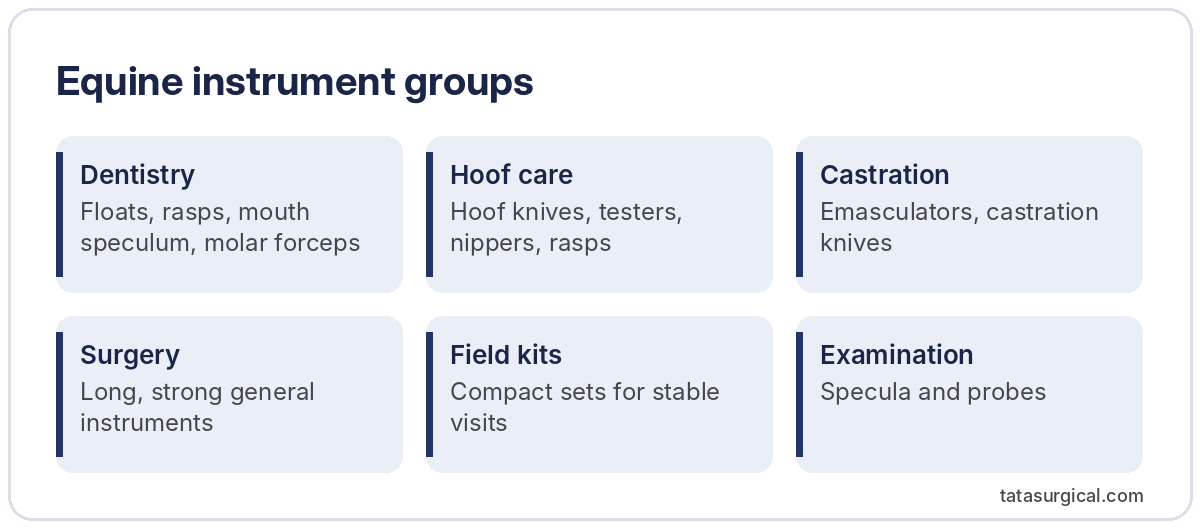
- Dentistry: Floats, rasps, mouth speculum, molar forceps
- Hoof care: Hoof knives, testers, nippers, rasps
- Castration: Emasculators, castration knives
- Surgery: Long, strong general instruments
- Field kits: Compact sets for stable visits
- Examination: Specula and probes
A routine dental visit
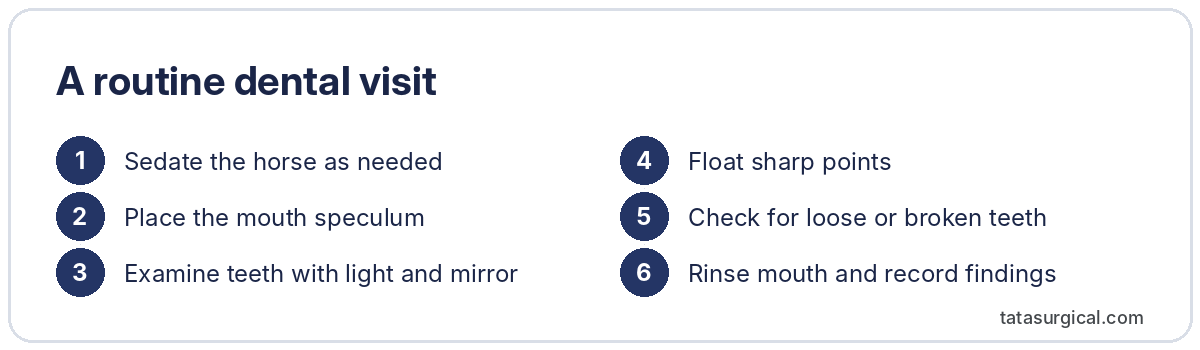
- Sedate the horse as needed
- Place the mouth speculum
- Examine teeth with light and mirror
- Float sharp points
- Check for loose or broken teeth
- Rinse mouth and record findings
Choosing equine instruments
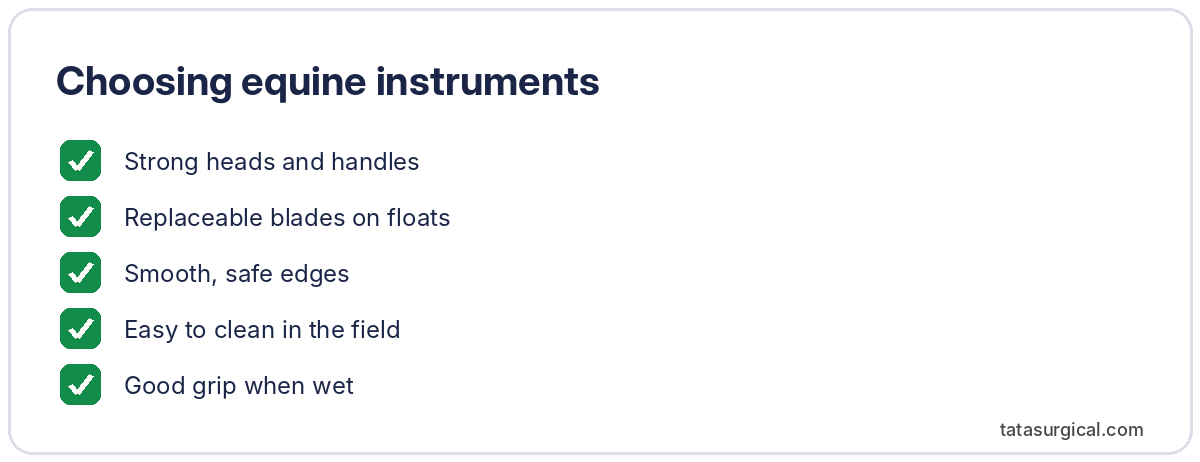
- Strong heads and handles
- Replaceable blades on floats
- Smooth, safe edges
- Easy to clean in the field
- Good grip when wet
In detail: safety for horse and vet
Horses are large and can move suddenly. Instruments must be robust enough not to break under force and shaped to avoid injury. Mouth specula must open and lock securely. Hoof knives must have secure handles. Field cleaning matters because work often happens in stables.
Worked example
An equine practice standardises a field dental kit in a hard case with floats, a speculum, a mirror and extraction instruments, plus cleaning brushes and a bucket, so every vet carries the same kit.
Proof box
Proof: Equine dentistry is recognised as part of routine horse care; horses’ cheek teeth erupt continuously and can form sharp points that need regular floating.
Frequently asked questions
How often do horses need dental care? Often once or twice a year, depending on age and advice from the vet.
What is a float? A rasp used to smooth sharp tooth edges.
Left- or right-handed hoof knives? Both exist; choose by the user’s preference.
Can equine instruments be autoclaved? Many can; large items may need other approved methods.
Glossary
- Floating: filing horses’ teeth.
- Mouth speculum: device to hold the mouth open.
- Hoof tester: pincer to find painful areas in the hoof.
Key takeaways
- Strength and safety first
- Keep complete field kits
- Clean thoroughly after each visit
Standards and sources
- Related: equine dental (see Equine dental instruments: a buyer’s guide), hoof care (see Hoof care instruments for vets and farriers), castration (see Emasculators and castration instruments for large animals)
Equine range from Tata Surgical
Ask about our equine instruments.
Looking for instruments like these?
Browse our catalogue or send us your drawing. We reply with prices, lead time and shipping terms.