

Short answer: A new clinic needs diagnostic instruments, a few minor surgery sets or kits, wound care and dressing instruments, and specula for its specialities. The key decision is whether to sterilise on site (reusable sets plus an autoclave) or use single-use kits. Buying instruments for a new clinic therefore starts with a short, practical list.
Starter instruments for a clinic
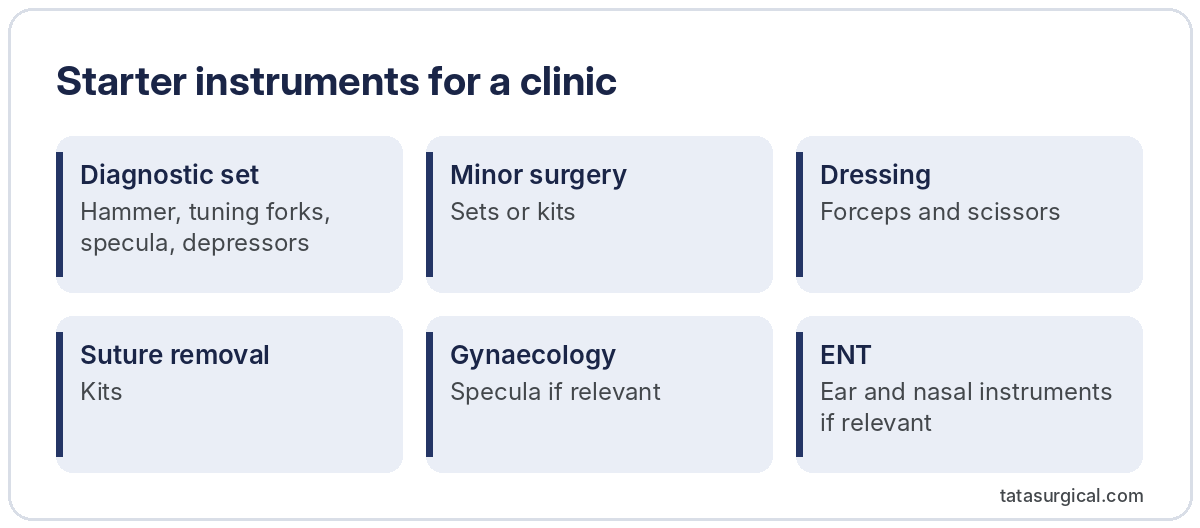
- Diagnostic set: Hammer, tuning forks, specula, depressors
- Minor surgery: Sets or kits
- Dressing: Forceps and scissors
- Suture removal: Kits
- Gynaecology: Specula if relevant
- ENT: Ear and nasal instruments if relevant
Deciding reusable or single-use
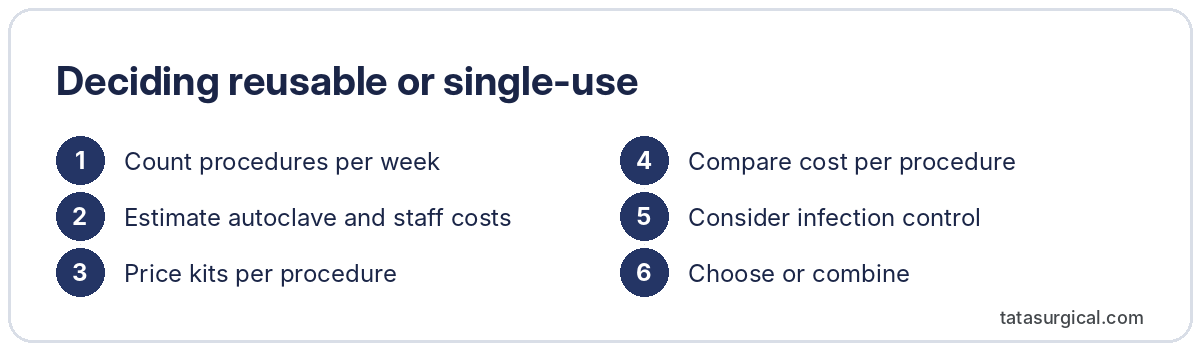
- Count procedures per week
- Estimate autoclave and staff costs
- Price kits per procedure
- Compare cost per procedure
- Consider infection control
- Choose or combine
Clinic setup checklist
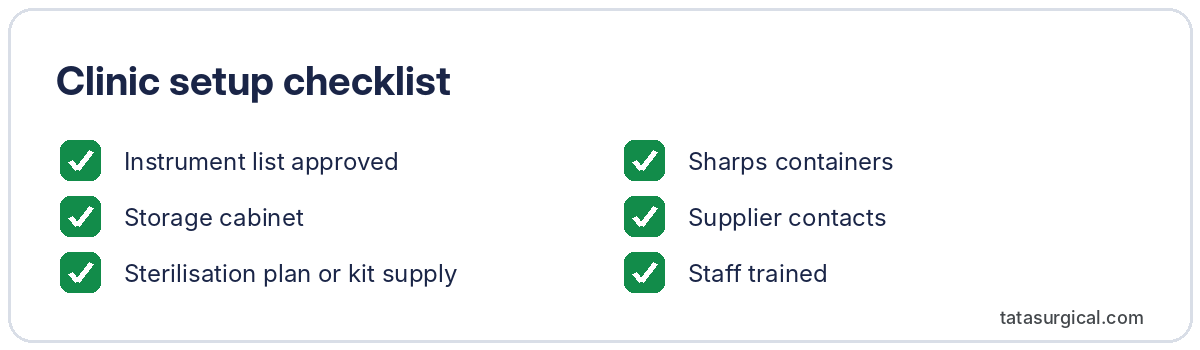
- Instrument list approved
- Storage cabinet
- Sterilisation plan or kit supply
- Sharps containers
- Supplier contacts
- Staff trained
In detail: start lean, grow smart
New clinics often over-buy instruments they rarely use. Start with core items and add more as demand grows. A supplier who can deliver small reorders quickly helps.
Worked example
A new family clinic buys three diagnostic sets, two minor surgery sets, a Class B steriliser and a stock of single-use suture removal kits, then adds gynaecology specula when a women’s health service starts.
Proof box
Proof: Cost-per-procedure comparisons often show single-use kits are cheaper at low volumes, while reusable sets win at higher volumes with efficient reprocessing.
Frequently asked questions
Do I need an autoclave? Only if reusing instruments.
What is the most used clinic instrument? Dressing forceps and scissors are among the most used.
Can I start with kits and switch later? Yes, many clinics do.
How do I choose a supplier? Check quality, documents and reorder speed.
Glossary
- Class B steriliser: benchtop steriliser with vacuum cycles.
- Kit: pre-packed sterile set.
- Diagnostic set: examination instruments.
Key takeaways
- Start with core items
- Decide reusable vs single-use by volume
- Grow as services grow
Standards and sources
- Related: consulting room (see Diagnostic instruments for the consulting room: the complete guide), minor surgery (see Minor surgery: the complete guide to instruments and setup), cost per procedure (see Cost per procedure: single-use kits vs reusable sets)
Planning instruments for a new clinic
Instruments for a new clinic should match the services you will offer on day one. Therefore, list those services first. For example, a general practice needs diagnostic tools, a minor surgery set and dressing instruments. In addition, a women’s health clinic needs specula in several sizes.
Next, decide between reusable and single-use items. If you have an autoclave, reusable steel is usually cheaper per use. However, single-use kits save time and suit clinics without sterile services. As a result, many new clinics start with a mix.
Also, buy enough to allow for cleaning between patients. Then, add more instruments as your services grow. So, you avoid tying up cash in tools you rarely use.
Finally, choose a supplier who can help as you expand. The clinic overview gives wider background. Browse our products or request a quote for instruments for a new clinic.
Clinic packages from Tata Surgical
Looking for instruments like these?
Browse our catalogue or send us your drawing. We reply with prices, lead time and shipping terms.