Short answer: Livestock vets and farm teams use instruments for castration, obstetrics, hoof care, dehorning and wound care, plus large surgical instruments for caesarean and other procedures. They must be strong, simple and easy to clean in farm conditions.
Main livestock instrument groups
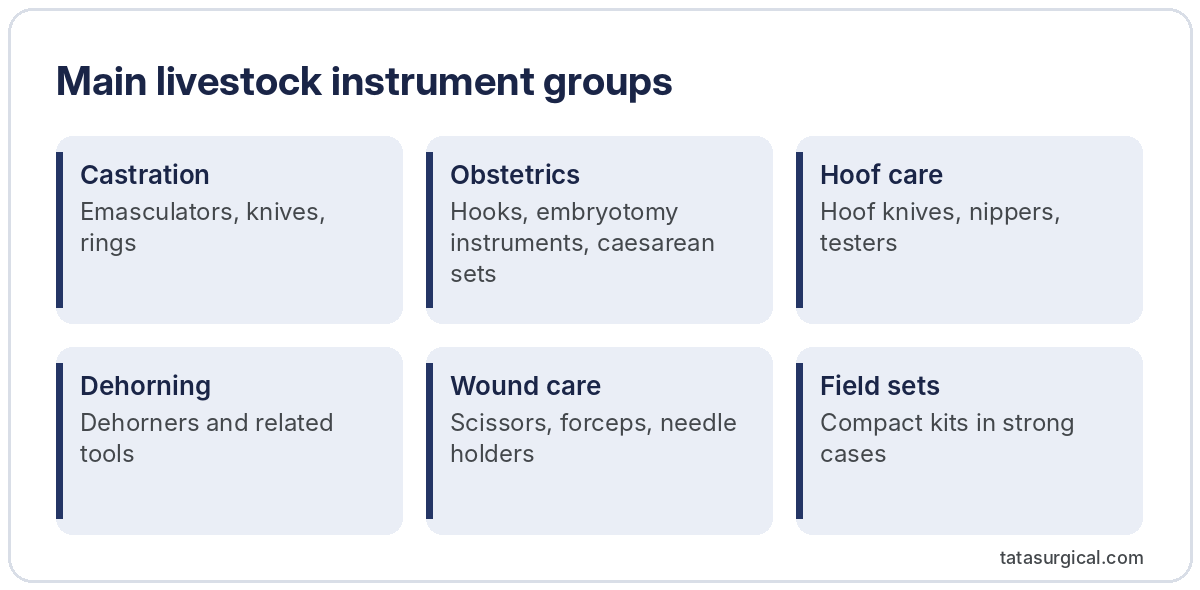
- Castration: Emasculators, knives, rings
- Obstetrics: Hooks, embryotomy instruments, caesarean sets
- Hoof care: Hoof knives, nippers, testers
- Dehorning: Dehorners and related tools
- Wound care: Scissors, forceps, needle holders
- Field sets: Compact kits in strong cases
Preparing a field caesarean kit
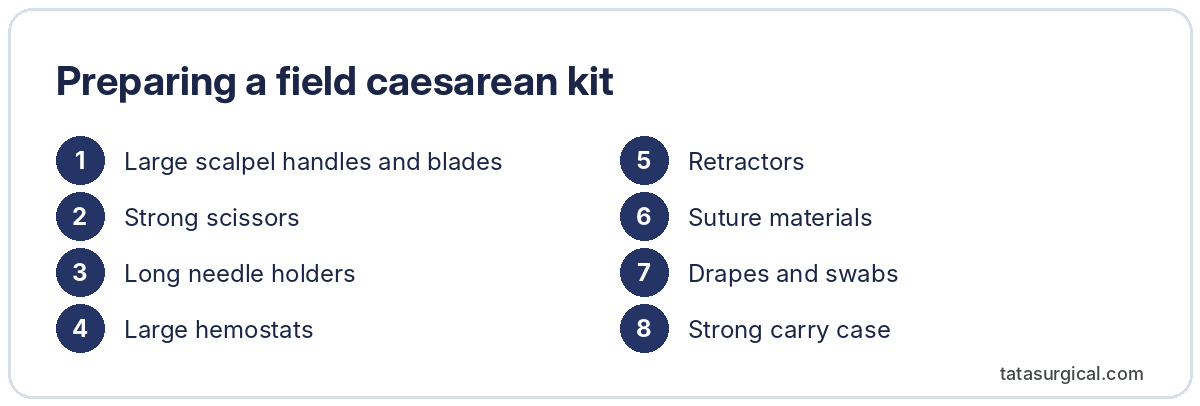
- Large scalpel handles and blades
- Strong scissors
- Long needle holders
- Large hemostats
- Retractors
- Suture materials
- Drapes and swabs
- Strong carry case
Field cleaning routine

- Rinse soil and blood immediately
- Scrub joints and serrations
- Rinse and dry
- Lubricate joints
- Sterilise before clean procedures
- Check for rust and damage
In detail: welfare and efficiency
Good instruments support animal welfare: sharp, clean instruments reduce pain and infection; correctly sized tools make procedures faster. Many countries regulate procedures such as castration and dehorning, including age limits and pain relief, so vets choose instruments to match the legal method.
Worked example
A dairy practice reduces infections after hoof treatments by giving each vet two sets of hoof knives so one set can be cleaned and disinfected between farms.
Proof box
Proof: Animal welfare rules in many countries set conditions for procedures like castration and dehorning, including pain management requirements.
Frequently asked questions
Which instruments are used for calving? Obstetric hooks, chains or ropes, and caesarean sets when needed.
Are emasculators the same for cattle and horses? Patterns and sizes differ; choose by species.
How do I stop rust on farm instruments? Clean and dry thoroughly; store dry; lubricate joints.
Do farmers buy instruments? Some items, yes, depending on local rules; surgical procedures are for vets.
Glossary
- Embryotomy: procedure to reduce the size of a dead calf for delivery.
- Dehorning: removing horns or horn buds.
- Field kit: portable set for farm work.
Key takeaways
- Robust instruments for farm conditions
- Clean, dry and lubricate after each use
- Follow welfare rules
Standards and sources
- World Organisation for Animal Health (WOAH)
- Related: livestock markets (see Veterinary instruments for Latin America’s livestock markets), obstetrics (see Obstetric instruments for large animals), field care (see Caring for veterinary instruments in field conditions)
Livestock range from Tata Surgical
Ask about our livestock instruments.
Looking for instruments like these?
Browse our catalogue or send us your drawing. We reply with prices, lead time and shipping terms.