



Short answer: Retractors hold tissue back so the surgeon can see and work. Hand-held retractors (Senn, Langenbeck, Deaver, Richardson) need an assistant; self-retaining retractors (Weitlaner, Gelpi, Balfour, Finochietto) lock open by themselves. The choice depends on wound depth, size and location.
Hand-held retractors
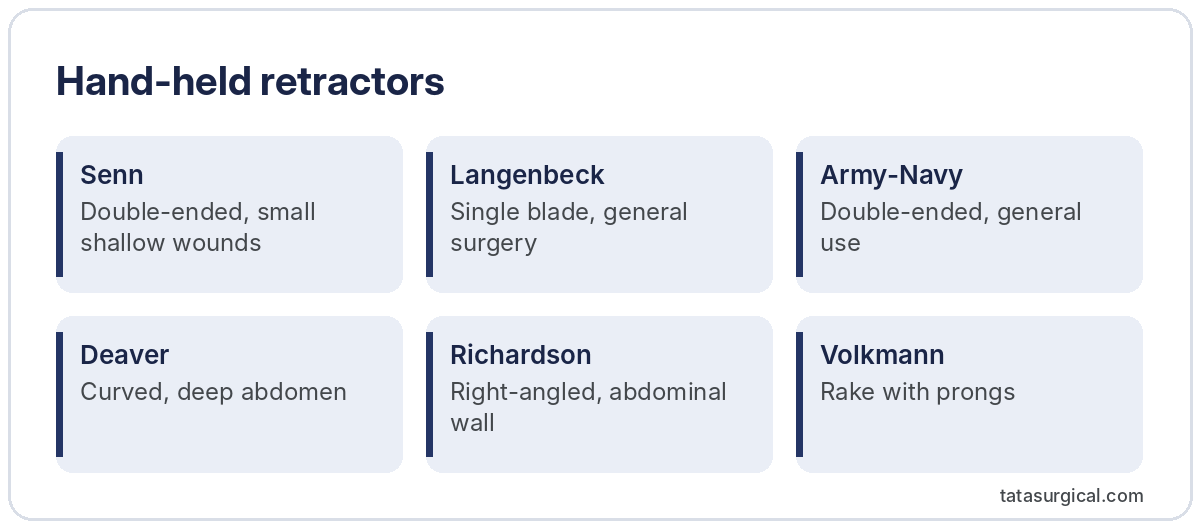
- Senn: Double-ended, small shallow wounds
- Langenbeck: Single blade, general surgery
- Army-Navy: Double-ended, general use
- Deaver: Curved, deep abdomen
- Richardson: Right-angled, abdominal wall
- Volkmann: Rake with prongs
Self-retaining retractors
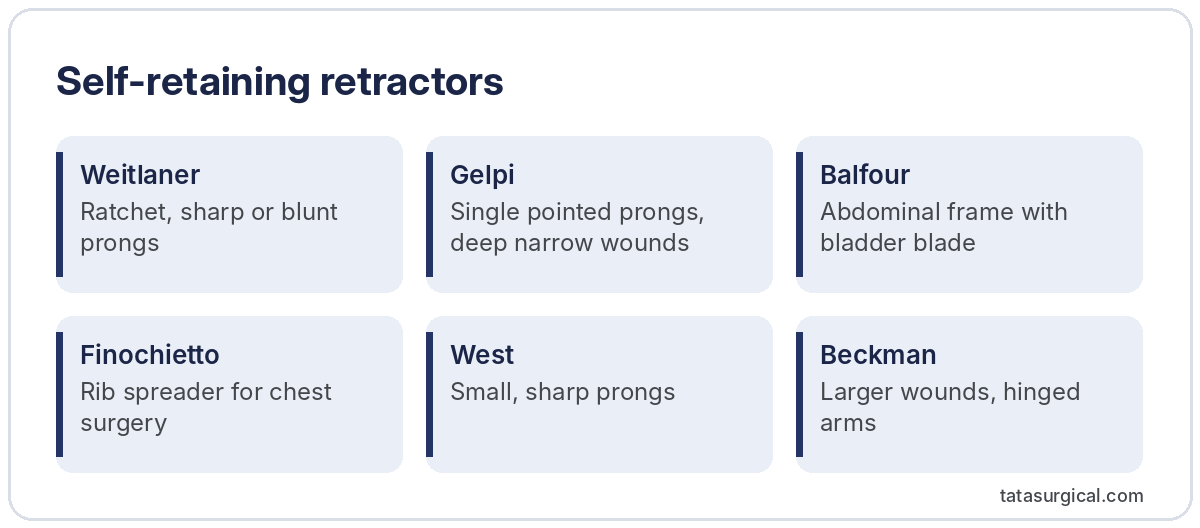
- Weitlaner: Ratchet, sharp or blunt prongs
- Gelpi: Single pointed prongs, deep narrow wounds
- Balfour: Abdominal frame with bladder blade
- Finochietto: Rib spreader for chest surgery
- West: Small, sharp prongs
- Beckman: Larger wounds, hinged arms
Choosing a retractor
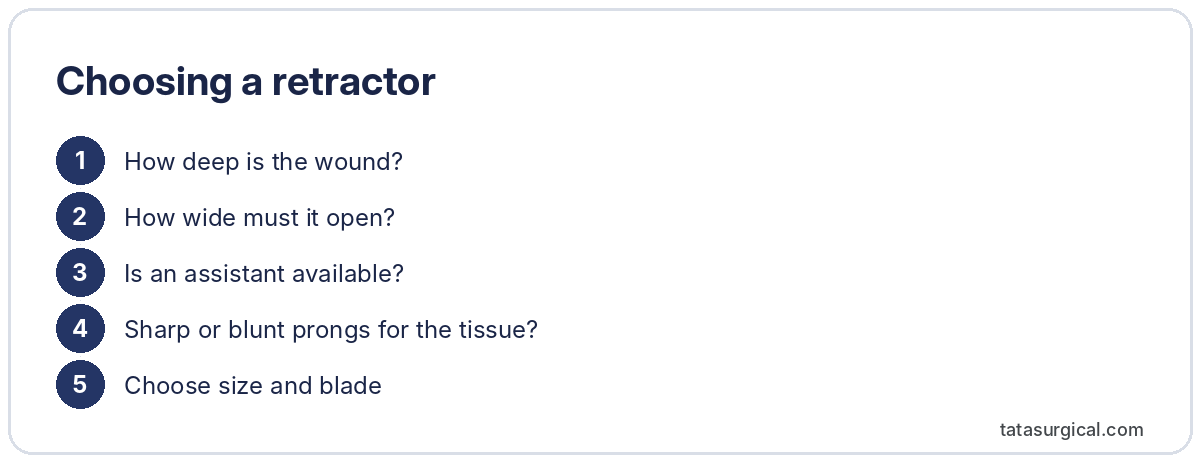
- How deep is the wound?
- How wide must it open?
- Is an assistant available?
- Sharp or blunt prongs for the tissue?
- Choose size and blade
Safety tips
- Pad blades where needed to protect tissue
- Release self-retaining retractors periodically in long procedures if the technique allows
- Check prongs and edges for burrs
Quality checks
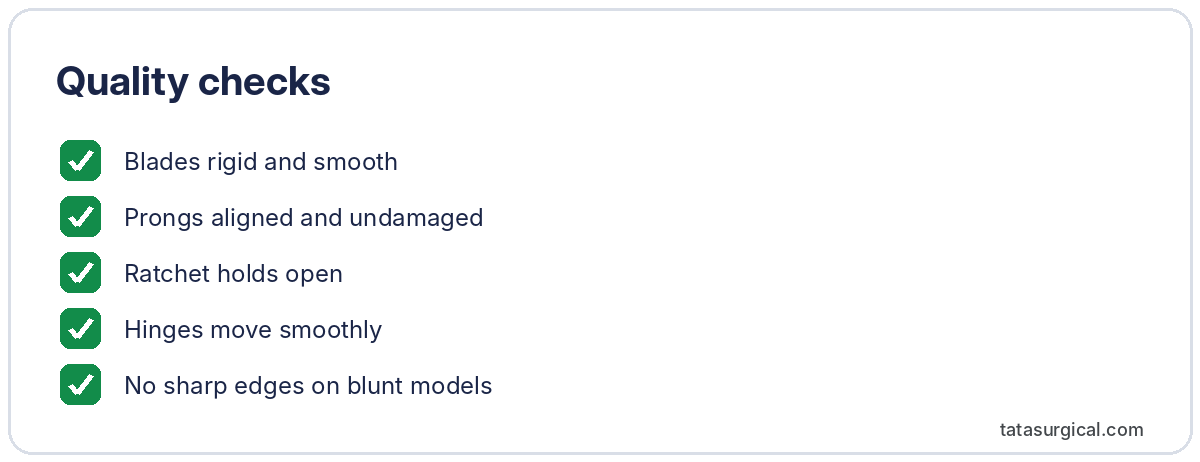
- Blades rigid and smooth
- Prongs aligned and undamaged
- Ratchet holds open
- Hinges move smoothly
- No sharp edges on blunt models
Worked example
A day-surgery unit replaces some hand-held retractors with small self-retaining Weitlaner retractors for minor procedures, freeing assistants for other tasks.
Proof box
Proof: Retractor names and designs are standard in surgical instrument catalogues and teaching texts.
In detail: safe retraction
Retraction exposes the operating field but can injure tissue if blades press too hard or too long. Surgeons choose blade width and depth to spread pressure, use moist packs to protect tissue and reposition retractors during long operations. Self-retaining retractors should be checked to ensure prongs are not too sharp for the tissue.
Frequently asked questions
What is the most common hand-held retractor? Senn and Langenbeck retractors are among the most common.
When are self-retaining retractors used? When steady exposure is needed without an assistant.
What is a Balfour retractor? A self-retaining abdominal retractor with a frame and blades.
Are retractors hardened? Many are made from corrosion-resistant, non-hardened stainless steel.
Glossary
- Blade: the part that holds tissue back.
- Prongs: pointed or blunt tines on rake retractors.
- Exposure: how well the surgeon can see the field.
Key takeaways
- Hand-held for flexibility, self-retaining for steady exposure
- Choose by depth and width
- Inspect prongs and ratchets
Standards and sources
- Related: retractor types (see Surgical retractors: Langenbeck, Senn, Weitlaner and Deaver explained), sets by procedure (see Surgical instrument sets by procedure: the complete guide)
Retractors from Tata Surgical
Looking for instruments like these?
Browse our catalogue or send us your drawing. We reply with prices, lead time and shipping terms.