Short answer: Veterinary dentistry for pets uses scalers and curettes for cleaning, probes and explorers for examination, elevators and luxators to loosen teeth, small extraction forceps and root tip picks. Most procedures are done under general anaesthesia with an ultrasonic scaler plus hand instruments.
Dental disease is one of the most common conditions seen in dogs and cats. Good instruments make cleaning thorough and extractions safer.
Core pet dental kit
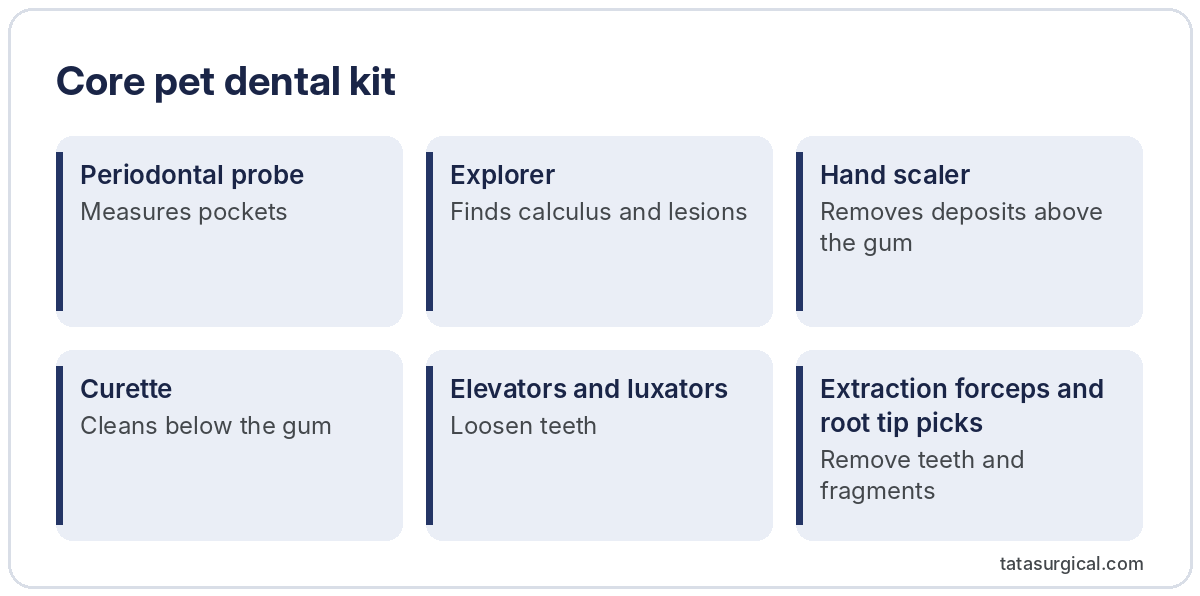
- Periodontal probe: Measures pockets
- Explorer: Finds calculus and lesions
- Hand scaler: Removes deposits above the gum
- Curette: Cleans below the gum
- Elevators and luxators: Loosen teeth
- Extraction forceps and root tip picks: Remove teeth and fragments
A dental cleaning under anaesthesia
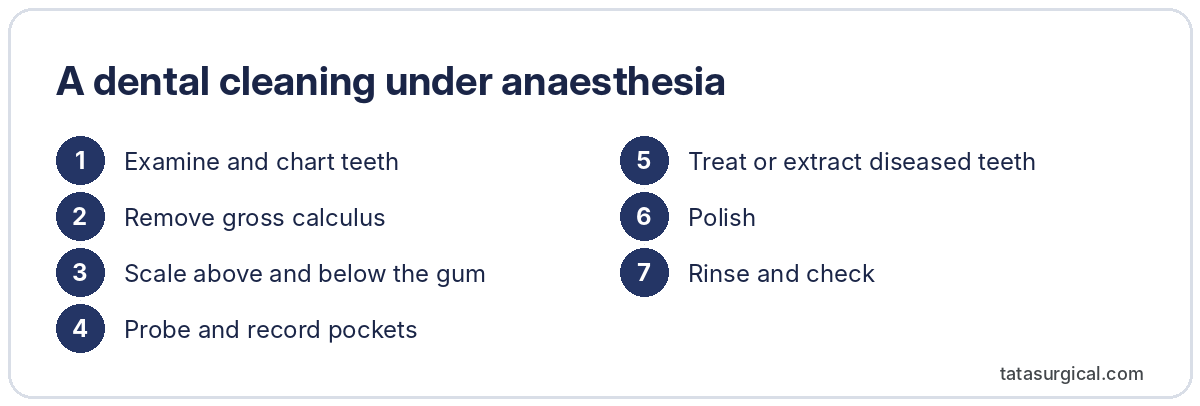
- Examine and chart teeth
- Remove gross calculus
- Scale above and below the gum
- Probe and record pockets
- Treat or extract diseased teeth
- Polish
- Rinse and check
Sizes
Pet mouths vary from tiny cats to giant dogs. Clinics usually keep small and standard sizes of elevators, luxators and forceps.
Kit quality checks
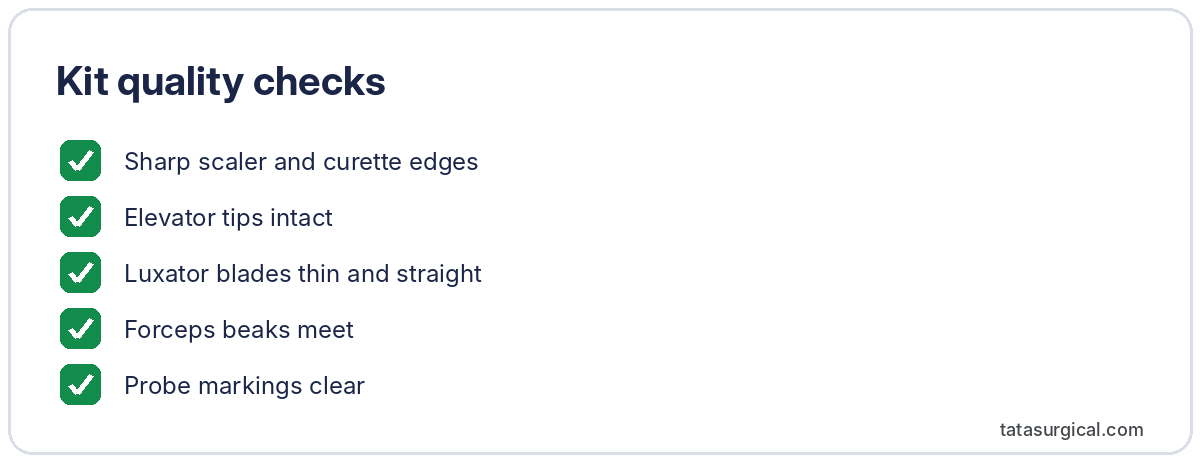
- Sharp scaler and curette edges
- Elevator tips intact
- Luxator blades thin and straight
- Forceps beaks meet
- Probe markings clear
In detail: why hand instruments still matter
Ultrasonic scalers remove most calculus quickly, but hand instruments clean pockets, finish root surfaces and handle delicate areas. For extractions, sharp luxators and elevators reduce force and the risk of jaw fractures in small animals.
Worked example
A clinic adds a dedicated feline elevator set after struggling with fractured roots in cats. Fewer roots break and procedures become faster.
Proof box
Proof: Veterinary dental guidelines, such as those from the American Animal Hospital Association (AAHA), describe anaesthesia, charting, cleaning above and below the gum line and radiographs as standard parts of dental care.
Frequently asked questions
Can human dental instruments be used on pets? Many can, but sizes and patterns designed for animals are often better.
How often should instruments be sharpened? Regularly; scalers and curettes dull with use.
Are dental cassettes useful for vets? Yes, they keep kits complete.
What is a root tip pick? A fine instrument to remove root fragments.
Glossary
- Periodontal pocket: space between gum and tooth.
- Luxator: thin-bladed instrument to cut tooth ligament.
- Charting: recording dental findings.
Key takeaways
- Combine ultrasonic and hand instruments
- Keep small and standard sizes
- Keep edges sharp
Standards and sources
- AAHA: Dental care guidelines for dogs and cats
- Related: pet dental instruments (see Dental instruments for dogs and cats)
Veterinary dental range from Tata Surgical
Looking for instruments like these?
Browse our catalogue or send us your drawing. We reply with prices, lead time and shipping terms.